Monday, March 13, 2017

Three Seashells: The Dangers of Not Backing Up Your Details

There was a post earlier today, in which a friend ask (begged) to know how the three seashells are used.

For those who don't know, the three seashells are what replaced toilet paper in the future in the 1993 Sylvester Stallone film, Demolition Man. The main character expresses confusion about the seashells and all the future-people giggle and comment on how he doesn't know how to use them. But it is never revealed how they are used.

24 years later, people are still trying to figure it out. Demolition Man was a good movie, but not great, so why is it that a throw-away entertainment flick has this effect?

Like a crappy cliffhanger ending, people are left wondering about something that should have been neatly tied up in the course of the plot. It isn't a big thing, but it's the thing that can make or break the perception of a work. It happens the same way when a TV show is cancelled too soon, or a sci-fi franchise makes up a technology that they don't adequately explain.

It's the reason authors need to research so much for small details. If we get them wrong, we risk creating the three seashells.

People remember Demolition Man, in part, because of the seashells. But it isn't a good way to remember it. We remember that there was this simple thing that probably wasn't supposed to be answered, or answerable, and the thing left us hanging. The seashells stole the movie away from the action (decent), speculation about the future (ironic), commentary on society (way deeper than it should have been), and more.

Instead of being lost to time or gaining a cult following for the symbolism, it is reduced to a question: What about those damn seashells?

Having a real reason for the seashells and addressing their use enough to have it make any kind of sense would have solved that. And it is important to remember not to leave the seashell question unanswered in other works of fiction.

You don't want your hard work remembered because of a bathroom joke gone wrong, do you?

Monday, March 6, 2017

Genre Fiction vs Mainstream Fiction: Why do I like Genre?

I am a thinker.

This isn't some kind of elitist statement. Sometimes, I go over in my head the exact way to make a roux or knead bread, or any one of a dozen menial tasks. Sure, I've also thought about black holes, free radical quarks, and the socio-economic effects of multiple religions on evolution for an alien species, but most of my thoughts are going over and over what has happened to me and what I am planning to do in the near or distant future.

I am a thinker. I live inside my head, first, and in the physical world only secondarily. Because of this, I analyze and over-analyze my own motives, as well as the motives of others. I'm pretty good about getting it right, too.

I recently read some short stories, contest winners and things with rave reviews. The thing I noticed was that, when genre is opened for a contest, mainstream fiction - literary fiction - gets picked nearly every time over genre fiction.

I get it. Literary fiction is supposed to be better, more intellectual, more elite. All around, you are a better person for liking literary fiction, we are told.

I hate it. And I'm pretty sure the two points above are connected.

Literary fiction has a distinct tendency towards living in someone else's head. The story isn't based on what happens so much as how the main character perceives what happens. Character growth is shown in the subtle change to how they think about a situation, while the actions are usually just everyday occurrences - drinking coffee, making supper, etc.

Genre fiction, on the other hand, is the action movie version. Stuff happens. Big stuff happens. Thoughts are often (but by no means always) secondary to the actions of the characters. Changes in thought and perception are shown in behavior, not in the stream-of-consciousness going through their heads. A barbarian shows growth when he throws down his sword, showing mercy when before he would have killed.

I'm a thinker. I spend most of my life living inside my head, analyzing my thoughts, speculating on the thoughts of other people. To me, literary fiction is like having my mind reflected back at me. Genre fiction allows me to speculate, to read into behaviors, to explore perceptions and presumptions.

I hate literary fiction. It isn't an escape for me. It isn't a new look into someone for me. Mostly, it makes me feel nauseous and fuzzy, like I've spent too long looking into a mirror that reflects another mirror.

Now, if that mirror has a genie that grants wishes trapped inside it...

Wednesday, January 4, 2017

The Masochism of Writing

Here I sit, wiping tears from my face and blowing my nose. I am in emotional distress.

Why? Because someone who's opinion I value called me a "VERY talented" writer. Another person who I admire says I "have it together."

If they only knew.

Writing is just this side of masochism... or a mental disorder (no disrespect to the non-neurotypical peeps out there - I literally mean the medical definition).

Writers are, by and large, introverts. Many of us have bullying, abuse or just plain shyness in our life histories. We aren't the in-your-face types. We don't brag about ourselves. We tend to have self-derogatory senses of humor, and a whole lot of empathy.

When you publish a book, 99.99% of the time, you are responsible for marketing that book. That means - getting into the spotlight, pushing the book, telling people how awesome it is, using ourselves as a brand...

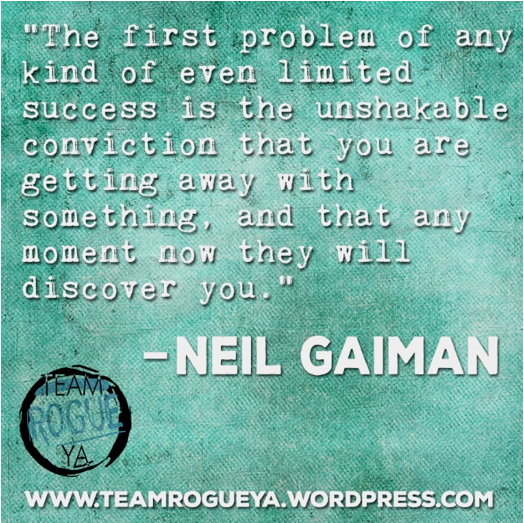
Writers tend to be uncomfortable getting attention. Many of us are incredibly insecure about our writing. Some of us even have imposter syndrome. We often have very real anxiety when our work is critiqued.

The number one way to sell a book is to get reviews. You get reviews by pretty much begging, pleading, and otherwise shoving your book into as many hands as possible and hoping they type out their reactions somewhere online.

It's like a sick joke.

I have to brace myself just to send an email to a publisher with a query. I close my eyes before I click "Send." I am brought to near-tears just knowing that someone has given an opinion about my work. No, it doesn't matter what that opinion is. The anxiety is about the fact that there IS AN OPINION.

And I'm not alone in this. Many, many authors go through the same thing. Most of us find ways to logic out the better responses, but we still often have the discomfort about the entire process.

So, I have someone who is really excited to read my book. She asked for a copy so she can read and review it.

I want to curl up on my bed and die... right up until it's over. Then, I'll do the whole thing again.

Tuesday, December 27, 2016

Stereotypes are Not Character Creation

I participate in a lot of writing groups - support groups, networking groups, etc. It's part of the life of an author. Many of these groups talk about the writing process, which is always an interesting insight into how others approach writing.

One thing that I've noticed recently is a string of questions about characterizations. These questions are many and varied, but generally come down to this: "I'm writing a character that is gendered/racial/LBGT. What do you think about the character being XYZ stereotype?" Except they don't admit that what they are asking about is a stereotype.

Too vague? Well, some of them have been about how "hard" it is for men to write women and for women to write men. Why? Because men writers have to be careful not to masculinize women, and women writers have to be careful not to feminize men.

I ask for clarification, cuz I'm just begging the querier (shut up, spellcheck, it IS a word - the google says so) to take back the -ism. I've gotten responses like "women aren't as aggressive as men in the way they think", or "men don't look at the directions when putting things together".

These are stereotypes, my friend. And they make for bad writing.

I'm sure some of you are thinking I'm being pretty harsh. After all, we all know those guys who try to put together IKEA furniture without the paperwork, or the woman who backs down from a kitten. Yeah, I know those people, too.

So?

Those are individuals, with individual quirks. One of these stereotypes isn't going to break your character, but when you have a guy who never "thinks or acts feminine"... well, I don't even know what that means, first of all. Secondly... never? Never ever? Never has a single thought like "damn, that's a fine looking furniture set!"? Nada?

Characters like that are, quite frankly, one-dimensional and boring. It's a boxed-cake method of character creation, and the reader can tell. The really sad thing about it is that it is so easy to fix those characters!

The truth is, people are people... are people. To make awesome characters, think about the people you know. Think about the things they do, what you know about their emotions and thoughts. Use that.

Make a cheerleader character. Make her blonde and petite and pretty. Make her not very into school. Maybe she's a little boy-crazy. Then give her a twist - she's a super-powered chosen one who is destined to save the world from vampires and demons with her strength, speed and high-kicking ability. (Yeah, you know who I'm talking about - but there's a reason that character works.)

Using a stereotype and standing it on it's head in some way gets people interested. People do embody stereotypes to a small degree, but there's always something deeper. People are nuanced, characters should be nuanced, too.

I have two LBGT characters in Too Wyrd. The truth is, I didn't create them to BE LGBT characters... they just were. In other words, they are not **GAY CHARACTERS**. They are characters who, as their nature/personality/characterization came to my awareness, were gay.

I'm currently working on a character who is black and from New Orleans. I knew she was Southern, but it wasn't until I started thinking about her appearance and personality did I realize that she's black and Cajun - and ends up pulling Nicola out a a pretty tough situation.

These characters are not their characteristics. They are not stereotypes of these characteristics. They are just people facing issues - sometimes those issues are about discrimination, which lends even more nuance to the characters. It's a fascinating exploration of humanity to find all the ways that people can just BE people.

So don't spoil the people by making them a stereotype. If they have a stereotypical characteristic, have a reason for them having that characteristic. Make it a part of THAT CHARACTER.


Friday, November 11, 2016

Writing Dark

Image by David Ho
I've been struggling with my writing this month. I have a great outline. I have plenty of time. When I sit down to write, the words come easily.

So why do I struggle?

The piece that I'm working on - Fluffy Bunny, book 2 of the Runespells series - is really dark. There's physical abuse, mental abuse, psychological torture... And the character arc is all about overcoming what's in her own head, first and foremost.

I love my main character, Nicola. She's a great character.

So, I sent her to be brainwashed by a cult and killed her.

Yeah, she was brought back, but she experienced death. And her self-identity has been under fire. Her pro-active nature has been suppressed. Her love and loyalty has been co-opted.

I've been struggling to write because my characters are going through such a hard time, I can barely hold myself together in the face of their hopelessness and anxiety.

It isn't often that people really talk about the psychological effects of writing from a personal, in-the-moment perspective. I'm sure that my natural empathy for characters (mine or others') isn't helping my plight. In a way, I'm losing myself right alongside Nicola.

The thing is, I write what I experience, even if the experience in only in my own head. So, to write this psychological suspense, I have to make myself experience it. I have to create the situation in my head and figure out the emotions and the details of how that works.

It's draining me, little by little. But I think it will be worth it.